
Introduction
AI customer behavior prediction software is transforming how businesses understand and anticipate their customers’ needs. By analyzing vast amounts of data, this technology helps companies forecast what customers are likely to do next, enabling smarter decisions. The challenge many businesses face is making sense of complex customer signals to act in real time—manual methods fall short here. AI-powered customer behavior analysis bridges that gap, offering a reliable way to predict actions before they happen. This clarity in foresight drives better marketing, sales, and product strategies across industries.
What AI Customer Behavior Prediction Software Really Is
At its core, AI customer behavior prediction software uses artificial intelligence to sift through customer data and spot patterns that indicate future behavior. Think of it like a seasoned detective piecing together clues from past actions, browsing habits, and transaction history to forecast what the customer might do next. For example, an online retailer could predict which customers are likely to abandon their carts and then target those shoppers with timely offers or reminders. This software goes beyond simple data crunching—it turns raw information into actionable insights that align with real-world customer behavior.
Why Businesses Need AI to Predict Customer Behavior
Before AI, companies relied on manual analysis or basic analytics that only scratched the surface. Human analysts could identify obvious trends, but they struggled with the sheer volume and complexity of customer data. This gap led to missed opportunities and reactive decision-making. When businesses integrate AI software for predicting customer behavior, they shift from guesswork to data-driven foresight. The cause-and-effect here is straightforward: accurate predictions enable proactive engagement, which improves conversion rates and customer satisfaction. Without AI, companies risk lagging behind competitors who leverage these insights daily.
How AI Customer Behavior Prediction Software Works
Data Signals and Customer Actions
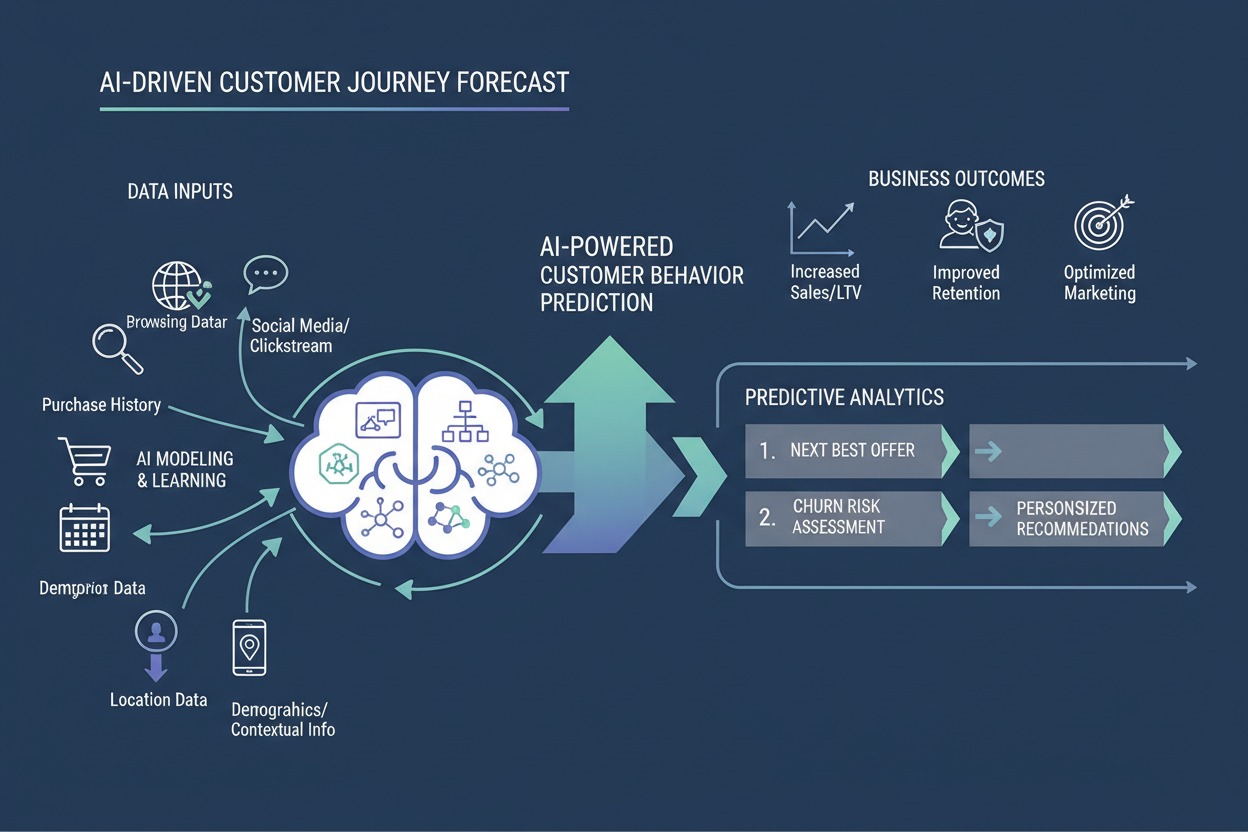
The process starts with collecting diverse data signals—everything from website clicks and purchase history to social media interactions and customer service chats. These signals represent the digital footprints customers leave behind, each one a piece of the behavioral puzzle.
Pattern Recognition Over Time
Next, the software identifies patterns across these signals. It’s like watching a customer’s journey unfold repeatedly and noticing recurring behaviors—such as browsing specific product categories before making a purchase. This step involves learning what typical customer paths look like and spotting deviations that might signal a future change.
Predictive Modeling Logic
Using the recognized patterns, the AI builds models to estimate the likelihood of future actions. For instance, it might calculate the probability that a customer will subscribe to a service next month or churn within the quarter. These models continuously refine themselves as more data flows in, improving prediction accuracy over time.
Decision Support Outputs
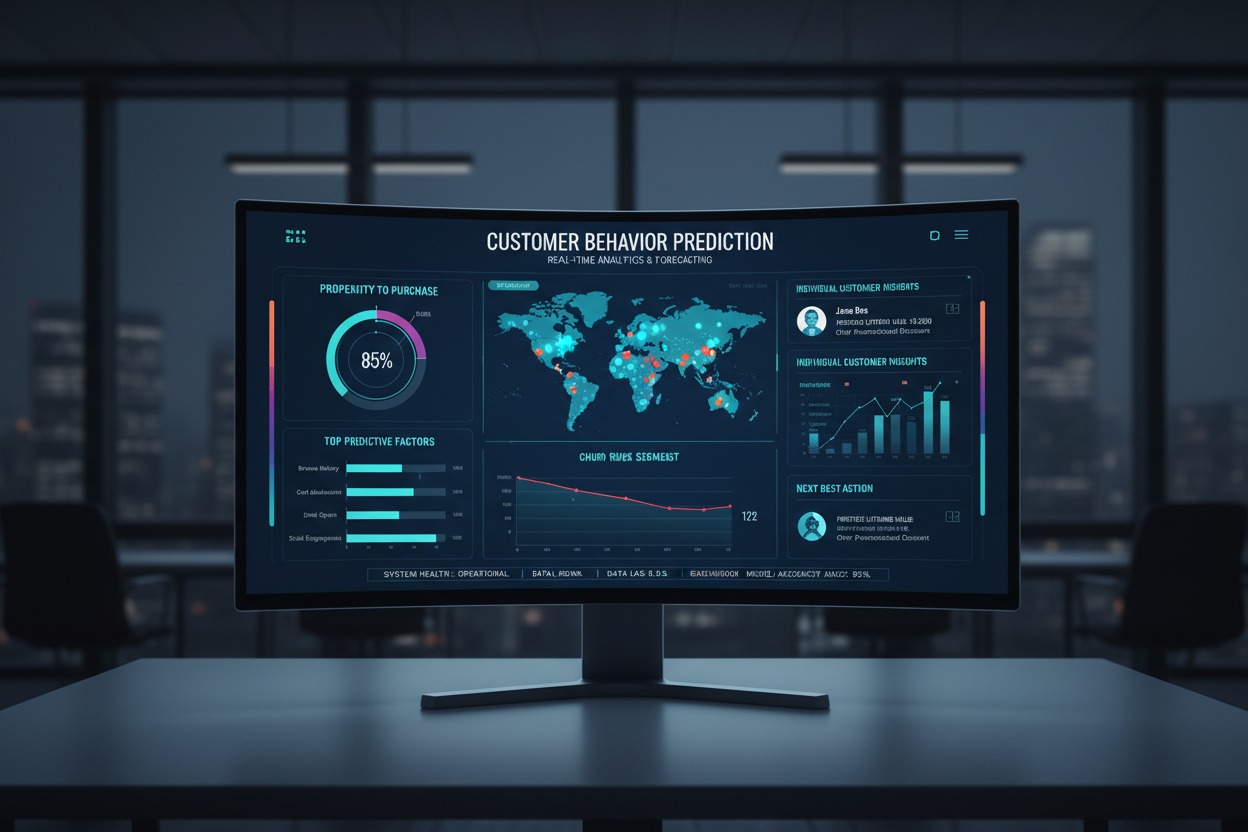
Finally, the software presents its findings through clear, business-friendly dashboards or alerts. These outputs help decision-makers act swiftly—whether that means adjusting marketing campaigns or prioritizing high-risk customers for retention efforts. The key is turning complex data into straightforward guidance that supports real business moves.
Real Business Use Cases
Marketing teams use AI customer behavior prediction software to deliver personalized content that resonates with individual preferences. Rather than blasting generic messages, they target customers with offers tailored to where they are in the buying journey.
Sales forecasting also benefits greatly. By anticipating customer purchases, sales leaders can align inventory and staff resources more effectively, reducing costs and improving service levels.
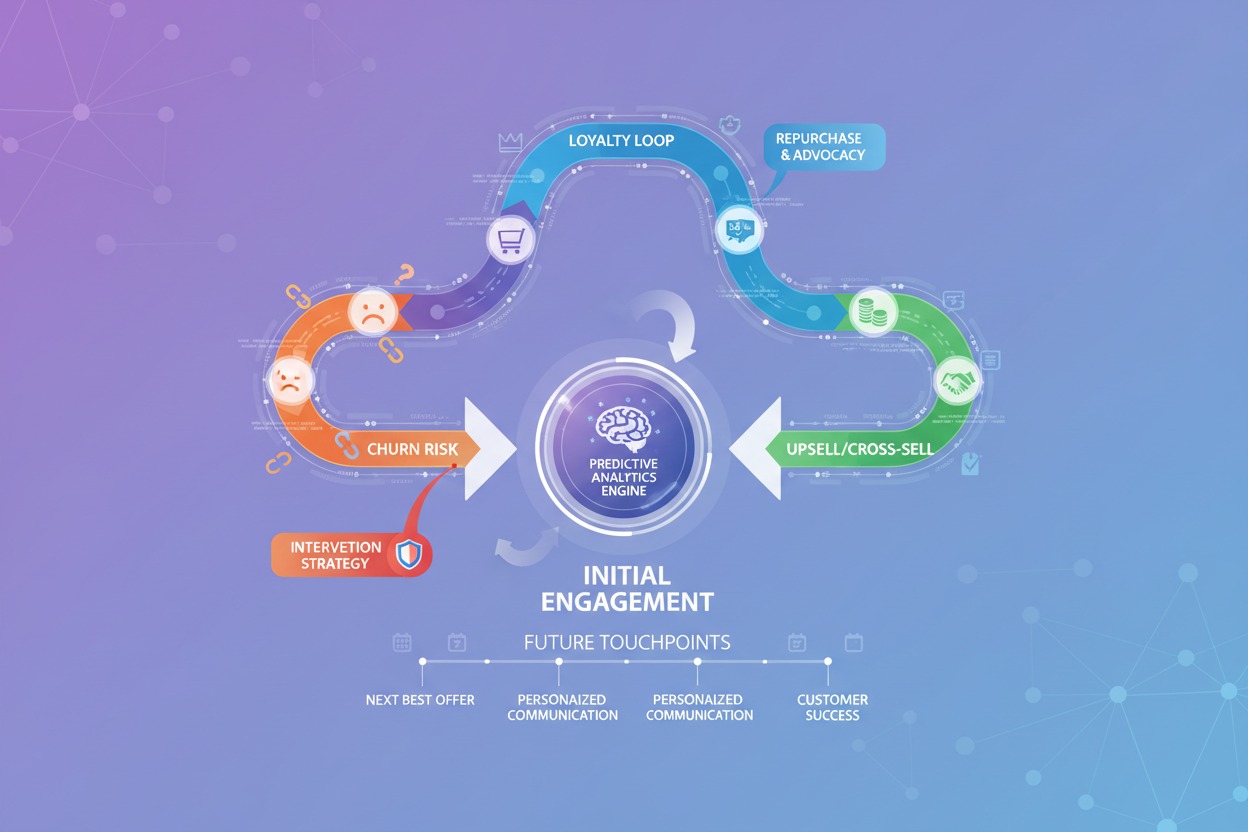
For customer retention, AI highlights which clients might be slipping away, allowing businesses to intervene with customized loyalty programs or timely outreach.
In product recommendations, AI helps surface items that customers are most likely to value, boosting cross-sell and upsell opportunities. The result? Higher engagement and revenue without guesswork.
Benefits of AI Customer Behavior Prediction Software
- Enhances decision-making with data-driven insights
- Increases marketing ROI through targeted campaigns
- Improves customer retention by identifying churn risks early
- Optimizes inventory and sales strategies with accurate forecasts
- Personalizes customer experiences at scale
- Reduces time spent on manual data analysis
- Supports proactive rather than reactive business management
Pros and Cons of AI Customer Behavior Prediction Software
Pros
- Provides real-time, actionable customer insights
- Handles large, complex data sets efficiently
- Continuously improves prediction accuracy
- Enables personalized customer engagement
- Supports cross-departmental decision-making
Cons
- Requires quality data to be effective
- Can be complex to integrate into existing systems
- Predictions are probabilities, not certainties
- Needs ongoing tuning and validation to maintain accuracy
- Initial setup can demand significant resources
Common Misunderstandings
One common misconception is that AI customer behavior prediction software guarantees perfect predictions. In reality, it offers probabilities based on patterns—not crystal balls. Another myth is that it replaces human judgment. Instead, it complements decision-makers by providing deeper insight. Some also expect instant results, but building effective models takes time and data. Lastly, this software is not a one-size-fits-all solution; its impact depends on how well it aligns with specific business goals and processes.
Frequently Asked Questions
How quickly can a business see results from AI customer behavior prediction software?
Results vary but typically emerge within weeks to months as data accumulates and models refine.
Is this software suitable for small businesses?
Yes, especially those with digital customer interactions, though scale and cost should be considered.
Can AI predict why customers behave a certain way?
AI identifies patterns and probabilities but doesn’t explain motivations; human insights remain essential.
What types of data are most important?
Customer transactions, website behavior, interaction history, and demographic information are key inputs.
How does AI handle changing customer behavior over time?
Models continuously update with new data, adapting to shifts and trends automatically.
Does implementing this software require technical expertise?
Some technical support is needed initially, but many platforms offer user-friendly interfaces for business users.
Key Takeaways
- AI customer behavior prediction software turns data into foresight.
- It helps businesses act proactively, improving marketing, sales, and retention.
- The software relies on pattern recognition and predictive modeling, not guesswork.
- Effective use depends on quality data and alignment with business goals.
- It complements human judgment by enhancing decision-making precision.
- Understanding its limits prevents unrealistic expectations and maximizes value.