
When Your Phone Understands You Better Than Your Friend
Have you ever talked to your phone and felt like it actually “got” what you meant? Maybe you asked for a restaurant nearby or dictated a message, and the response was surprisingly accurate. This isn’t magic; it’s a clear example of artificial intelligence quietly working behind the scenes. While it may seem like science fiction, artificial intelligence is very much part of our daily lives. Understanding what it really means and how it works can feel tricky, but it’s easier than you think. Let’s explore the world of artificial intelligence together, breaking down complex ideas into simple, relatable concepts.
Artificial Intelligence: A Clear, Human Definition
At its core, artificial intelligence means teaching machines to think and act in ways that resemble human intelligence. Think of it as creating a helper that can learn, solve problems, and make decisions—sometimes even without explicit instructions at every step. Rather than focusing on the technical wiring or programming, consider artificial intelligence the ability of a computer to perform tasks that usually require human smarts, such as understanding language, recognizing images, or making predictions.
The Core Idea Behind Artificial Intelligence
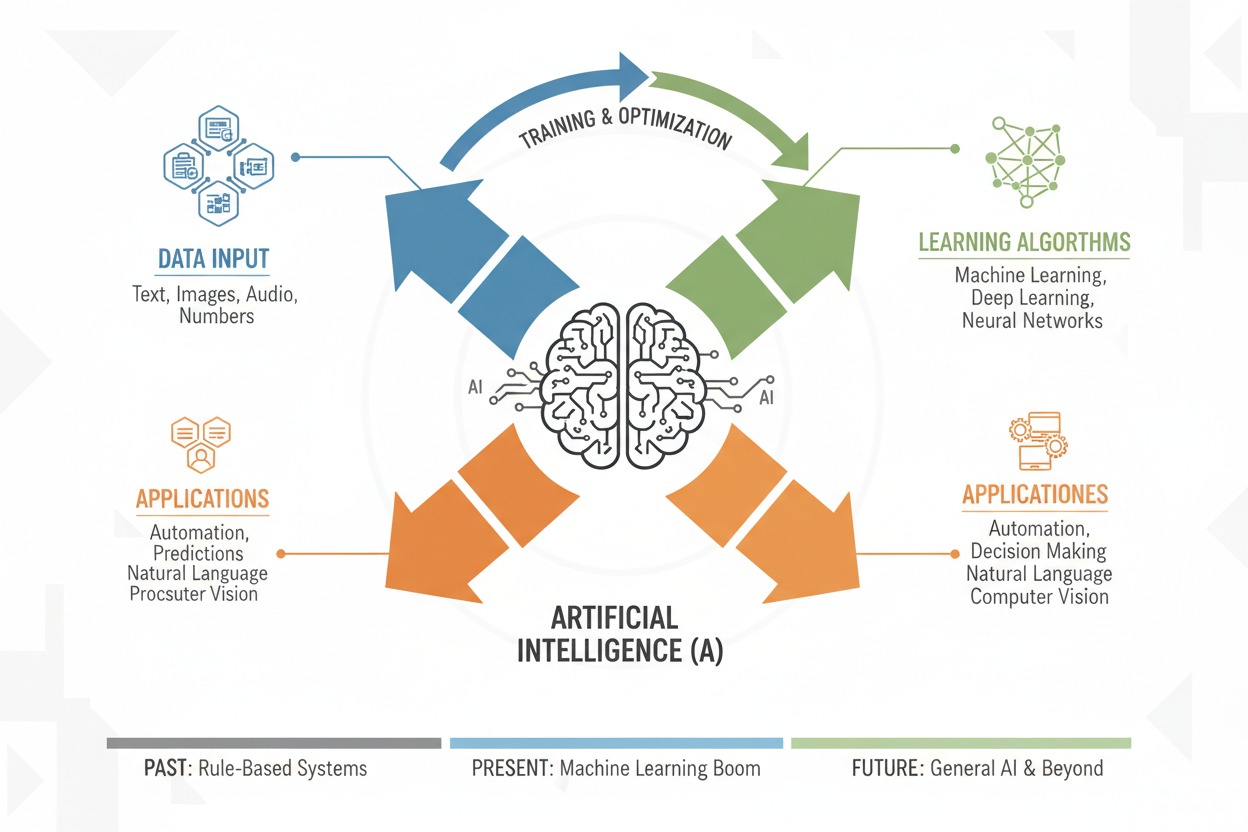
Imagine you have a student who learns by observing patterns and practicing repeatedly. The main goal of artificial intelligence is to build machines that can learn from information, recognize patterns, and improve their performance over time. Instead of programming every tiny detail, AI systems use examples and experience to figure out the best way to complete a task. This approach mimics how humans learn—by trying, making mistakes, and adjusting—except it happens at lightning speed inside a computer.
Types of Artificial Intelligence Explained Clearly
Artificial intelligence isn’t just one thing. It comes in different forms, each with its own level of complexity and capability.
Narrow Artificial Intelligence
This is the kind you encounter most often. Narrow AI focuses on specific tasks. For example, voice assistants like Siri or Alexa, spam filters in your email, or recommendation systems on streaming platforms all rely on narrow AI. They do their jobs well, but can’t do anything outside their programmed area.
General Artificial Intelligence
General AI is the type you might imagine from movies: a machine that can understand, learn, and apply knowledge across a wide range of activities—just like a human. This kind of AI can think flexibly, solve problems it hasn’t seen before, and even understand emotions. We haven’t quite built this yet, but it’s a goal many researchers are working toward.
Super Artificial Intelligence
This is the futuristic idea of AI that surpasses human intelligence in every possible way. It could solve problems, create new ideas, and understand the world better than any person. Though it’s a popular concept in science fiction, super AI remains purely theoretical at this point.
[Image Suggestion: Visual showing types of artificial intelligence]
Artificial Intelligence Technologies Explained Simply
To achieve these different types of AI, several key technologies come into play. Think of these as the tools that give machines their “brains.”
- Machine Learning: This lets computers learn from data. Instead of coding every rule, machines spot patterns in information and make predictions or decisions based on that.
- Natural Language Processing (NLP): This technology helps computers understand and respond to human language. It powers chatbots, translation apps, and voice assistants.
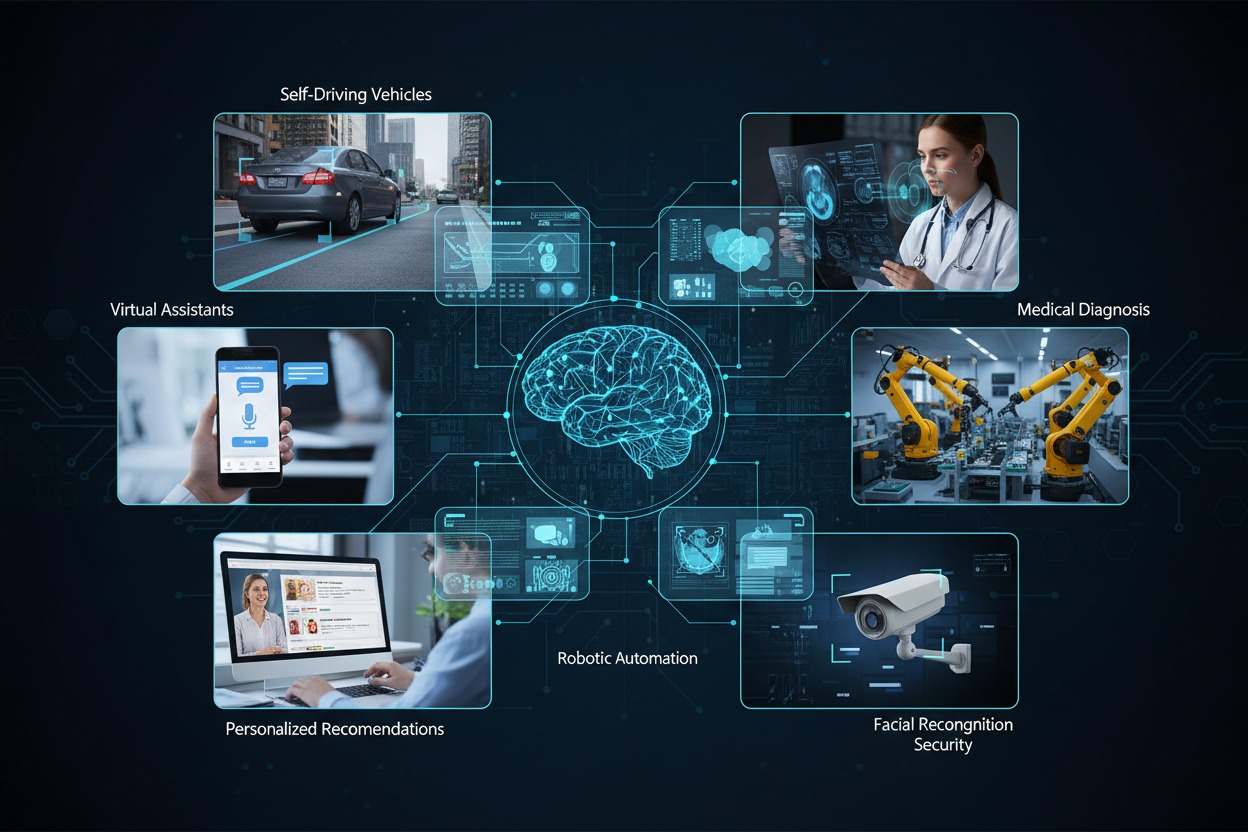
- Computer Vision: This allows machines to “see” and interpret images or videos. It’s behind facial recognition, self-driving cars, and medical imaging analysis.
- Robotics: Combining AI with physical machines creates robots that can perform tasks in the real world, from factory work to household chores.
These technologies work together to help AI systems understand, learn, and interact with the world in ways that feel natural to us.
Real-World Examples of Artificial Intelligence
AI isn’t just a concept; it’s everywhere, making a difference in many areas.
- Everyday life: When your phone autocorrects your message or your favorite app suggests a movie, that’s AI at work.
- Business: Companies use AI to analyze customer data, predict trends, and improve products. For example, banks use AI to detect fraud by spotting unusual patterns in transactions.
- Education: AI helps personalize learning by adapting lessons to students’ needs, offering interactive tutoring, and even grading assignments faster.
Each example shows how artificial intelligence technologies improve efficiency, accuracy, and convenience in ways you might not even notice.
How Artificial Intelligence Is Used Today
Today, artificial intelligence helps us in many practical ways. It speeds up tasks that would take humans much longer, like sorting through vast amounts of data or recognizing spoken commands in noisy environments. AI supports doctors by suggesting diagnoses, assists farmers in monitoring crops, and even helps artists create new works. What’s important to remember is that AI is a tool—a powerful one—but it works best when paired with human judgment and creativity.
Benefits of Artificial Intelligence
- Makes daily tasks easier and faster
- Helps solve complex problems through data analysis
- Personalizes experiences in education, shopping, and entertainment
- Enhances safety in areas like transportation and healthcare
- Enables innovation in science and technology
Limitations and Challenges of Artificial Intelligence
While AI offers many benefits, it has its limits. AI systems can only work well when given quality data. Sometimes, they make mistakes or misunderstand context because they don’t truly “think” like humans. There are also important concerns about privacy, fairness, and transparency. These challenges remind us that AI is a tool to be guided thoughtfully, not an infallible solution.
Common Misunderstandings About Artificial Intelligence
One frequent myth is that AI will soon replace all human jobs. In reality, AI often handles repetitive tasks, freeing humans to focus on creative and interpersonal work. Another confusion is thinking AI “feels” or “thinks” like humans; instead, it processes information based on patterns without emotions or consciousness. These misunderstandings arise because of how AI is portrayed in stories and media, so it helps to separate fact from fiction.
Frequently Asked Questions
1. What is artificial intelligence in simple terms?
It’s the ability of machines to perform tasks that usually require human intelligence, like understanding language or recognizing images.
2. How does AI learn new things?
AI learns by spotting patterns in data and improving its responses over time through experience, similar to how people learn.
3. Can AI think and feel like a human?
No, AI doesn’t have feelings or consciousness; it analyzes information and follows programmed rules.
4. Are all AI systems the same?
No, there are different types, such as narrow AI for specific tasks and general AI, which can handle many tasks like a human.
5. Is AI already used in everyday life?
Yes, many apps and services you use daily rely on AI, like voice assistants and recommendation systems.
6. What are some risks of AI?
Risks include errors from bad data, privacy issues, and potential biases. It’s important to use AI carefully and responsibly.
Key Takeaways
- Artificial intelligence helps machines perform human-like tasks.
- Narrow AI focuses on specific jobs; general AI aims to do many things.
- AI technologies include machine learning, natural language processing, and computer vision.
- AI is widely used in daily life, business, and education.
- It offers benefits but also has clear limits and challenges.
- Understanding AI helps separate facts from common myths.