
Introduction
Have you ever wondered how artificial intelligence works step by step? It may seem like a mysterious process, but understanding it can clear up confusion and even ease fears about AI. Today, AI influences many parts of our lives—from the apps we use to the services we trust. Knowing how artificial intelligence works step by step helps us see its power and limits clearly.
Let’s break this down simply. Imagine AI as a curious learner, one that studies patterns in data, practices what it learns, and then makes decisions based on that learning. This process unfolds in clear stages. Together, we’ll explore each stage, making the complex world of AI easy to follow. By the end, you’ll feel confident about what AI does and how it does it.
What Artificial Intelligence Really Is
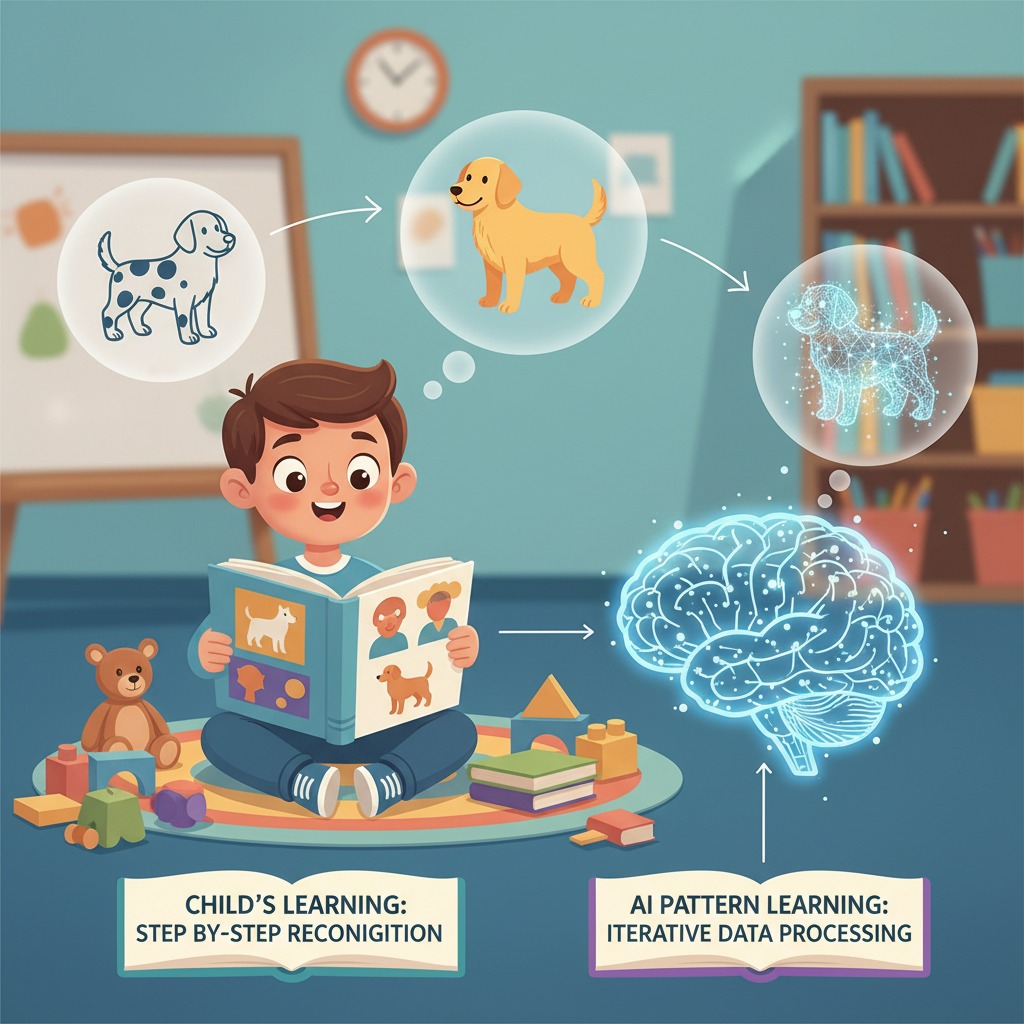
Artificial intelligence, in simple terms, is a machine’s ability to perform tasks that usually require human intelligence. Think of it like teaching a robot to recognize your face or to recommend your favorite song. However, AI is not magic or a thinking brain. It does not feel emotions or have intentions. It follows patterns and rules created from data.
To put it another way, AI is like a child learning to spot animals in a picture book. The child sees many animals, learns their shapes and colors, and then guesses what new animals might be. Similarly, AI learns from examples and then applies that learning to new situations.
The Core Idea Behind How Artificial Intelligence Works
At the heart of how artificial intelligence works lies a simple idea: learning from data. AI systems look for patterns in information. For example, if you show an AI many pictures of cats and dogs, it will begin to notice differences—like fur patterns or ear shapes. Once it finds these patterns, it can recognize a new cat or dog picture.
This is like how we learn in everyday life. We see many examples, notice similarities and differences, and use those clues to understand new things. AI follows the same path, but does it faster and with more data.
How Artificial Intelligence Works Step by Step
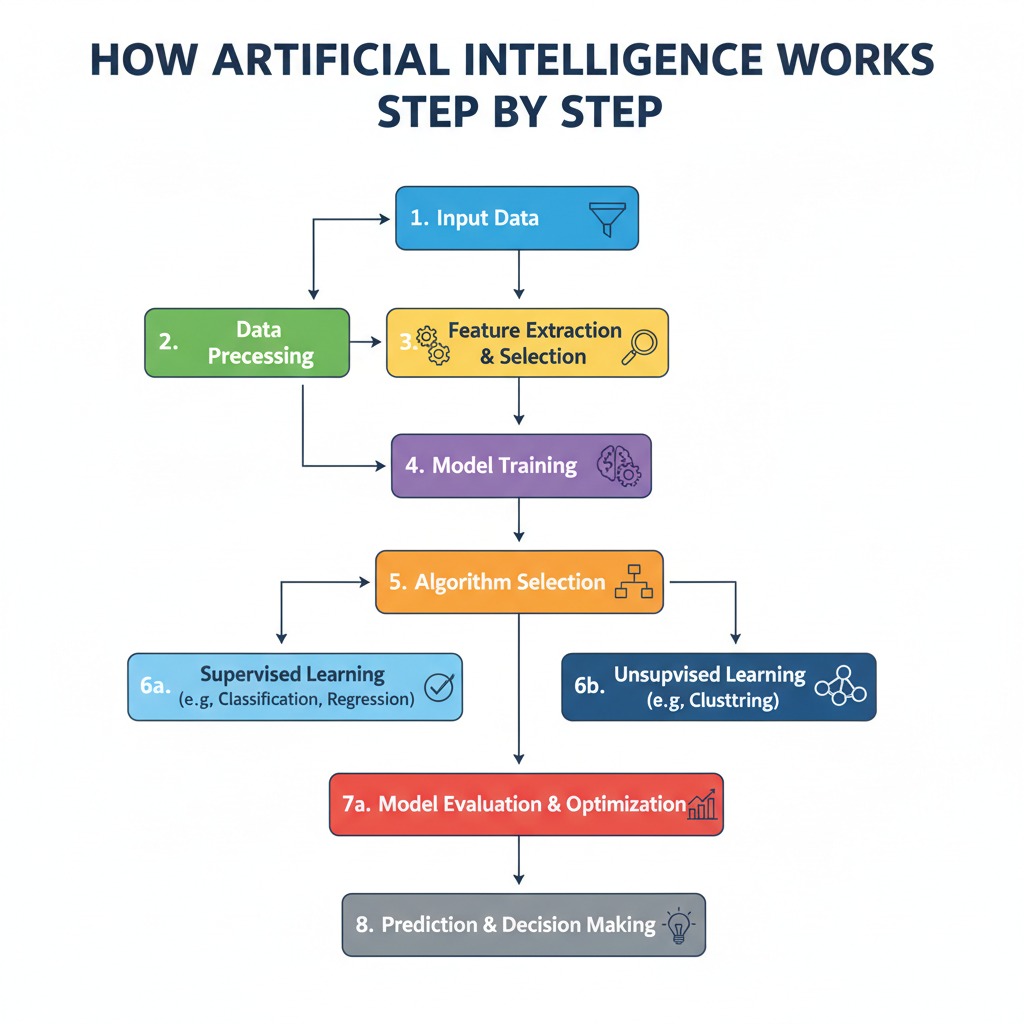
Step 1: Data Collection in How Artificial Intelligence Works
First, AI needs data. Data is the raw information—pictures, sounds, text, numbers—that AI studies. Imagine you want to teach AI to recognize flowers. You collect thousands of flower photos with labels saying “rose,” “tulip,” or “sunflower.” This large collection is the foundation.
Without data, AI cannot learn. So, gathering good quality, relevant data is the very first step. Simply put, data collection is like gathering all the pieces of a puzzle before assembling it.
Micro-summary: AI starts by collecting lots of information to learn from, just like gathering puzzle pieces.
Step 2: Data Preparation in the AI Process
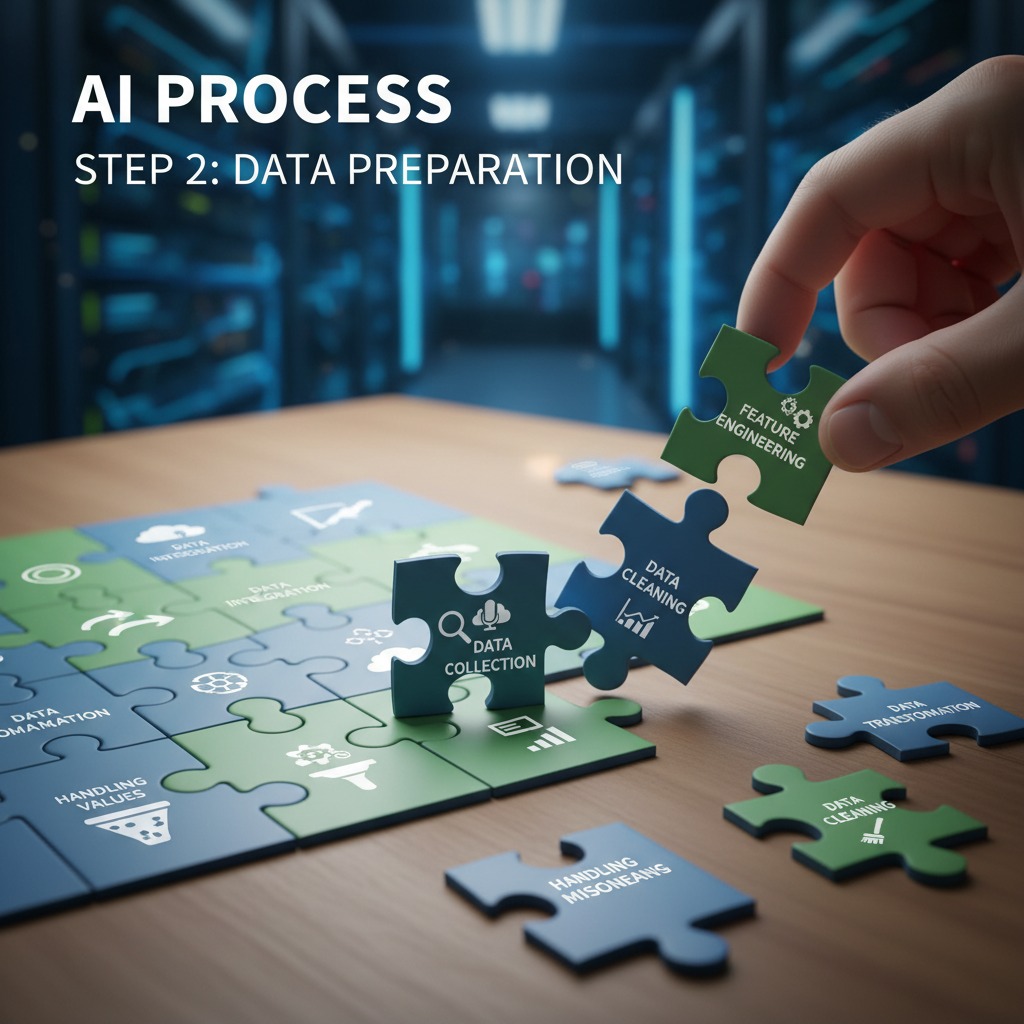
Next, not all data is perfect. Some photos might be blurry or mislabeled. So, we clean and organize the data. This step is called data preparation. It’s like sorting puzzle pieces by color and shape before putting them together.
For example, if some flower photos are dark or unclear, we remove or fix them. We also make sure all labels are correct. This helps AI learn accurately and faster.
Micro-summary: Cleaning and organizing data helps AI learn better by focusing on clear and correct information.
Step 3: Pattern Learning in How AI Works Step by Step
Now, AI looks for patterns in the prepared data. Imagine flipping through flower photos and noticing that roses often have many petals and a certain shape. AI uses math-based methods to find these repeating features.
Think of pattern learning as discovering the puzzle’s image by matching similar pieces. AI finds the hidden rules that separate one flower from another.
Micro-summary: AI finds patterns in data to understand differences and similarities, like spotting shapes in a puzzle.
Step 4: Model Training in the Artificial Intelligence Process
After finding patterns, AI creates a model—its way of understanding the world. Training the model means showing it data examples repeatedly until it recognizes patterns well.
Picture teaching a child to identify flowers by showing many labeled pictures over time. The child gets better with practice. Similarly, AI trains by adjusting its “thinking” to improve accuracy.
Importantly, this step doesn’t require coding or math from you. It’s the behind-the-scenes learning phase.
Micro-summary: Model training is AI’s practice time, where it learns to recognize patterns accurately.
Step 5: Testing and Improving the AI System
Once trained, AI is tested. This means checking if it can correctly identify new flower photos it hasn’t seen before. If it makes mistakes, we adjust the model or provide more data.
Testing is like giving a quiz to the learner. Based on results, AI improves through trial and error.
Micro-summary: Testing and refining help AI get better by correcting mistakes and learning more.
Step 6: Real-World Decision Making in Artificial Intelligence
Finally, AI uses its trained model to make decisions or predictions. For example, it might suggest which flower is in a photo you upload to an app.
This step shows AI at work in everyday life, applying what it has learned to new information.
Micro-summary: AI applies its learning to solve real problems and make helpful decisions.
Real-Life Examples of How Artificial Intelligence Works Step by Step
- Daily Life: Your smartphone’s voice assistant understands commands by recognizing speech patterns.
- Business: Online stores recommend products by learning your shopping habits.
- Education: Learning platforms personalize lessons based on your progress data.
- Technology: Self-driving cars detect objects on the road using AI models trained with millions of images.
Each example reflects the step-by-step AI process—from data gathering to decision making—tailored to different needs.
Why Understanding How Artificial Intelligence Works Matters
- Helps you trust AI systems by knowing their limits.
- Enables smarter use of AI tools in work and daily life.
- Prepares you for careers in technology and data fields.
- Encourages critical thinking about AI decisions.
- Reduces fear by replacing mystery with knowledge.
Understanding the step-by-step AI process is more than curiosity; it’s practical wisdom.
Common Misunderstandings About How Artificial Intelligence Works
- Myth: AI thinks like humans.
Truth: AI follows patterns; it does not feel or reason like people. - Myth: AI is always right.
Truth: AI can make mistakes, especially if the data is poor. - Myth: AI works without human help.
Truth: Humans design, train, and improve AI constantly. - Myth: AI will replace all jobs.
Truth: AI changes jobs but also creates new opportunities.
Calmly knowing what AI can and cannot do helps us use it wisely.
Pros and Cons of Artificial Intelligence Systems
Pros
- Speeds up data analysis.
- Automates repetitive tasks.
- Personalizes experiences.
- Improves decision accuracy.
- Supports innovation.
Cons
- Depends heavily on data quality.
- Can inherit biases from data.
- Requires careful human oversight.
- Sometimes lacks transparency.
- May cause job shifts in industries.
FAQ Section
Q1: What is the first step in how artificial intelligence works step by step?
First, AI collects data, which is the raw material it learns from.
Q2: Does AI understand like a human?
No, AI recognizes patterns in data but does not think or feel.
Q3: Why is data preparation important?
Because clean and organized data helps AI learn more accurately.
Q4: How does AI improve over time?
AI trains on data and gets tested, then adjusts based on mistakes to improve.
Q5: Can AI make decisions on its own?
AI makes decisions based on learned patterns but always follows its programming.
Q6: Is AI replacing jobs?
AI changes jobs but also creates new roles requiring new skills.
Key Takeaways
- Artificial intelligence learns step by step from data to make decisions.
- Data collection and preparation are the foundation of AI learning.
- AI finds patterns and trains models to understand new information.
- Testing and refining improve AI’s accuracy and usefulness.
- Real-life AI examples include voice assistants, recommendations, and self-driving cars.
- Knowing how AI works helps you use it wisely and reduces fear.
- AI has both benefits and challenges that require thoughtful use.
Ready to dive deeper? Explore more insightful guides and expert content right here on Mendanize, where learning meets clarity.